Save as PDF
Opens your browser print dialog — select "Save as PDF" to download.
EX304 (GS)
B.Tech. III Semester
Examination, December 2025
Grading System (GS)
Network Analysis
Note : (i) Attempt any five questions.
किन्हीं पाँच प्रश्नों को हल कीजिए।
(ii) All questions carry equal marks.
सभी प्रश्नों के समान अंक हैं।
(iii) In case of any doubt or dispute, the English version question should be treated as final.
किसी भी प्रकार के संदेह अथवा विवाद की स्थिति में, अंग्रेजी भाषा के प्रश्न को अंतिम माना जायेगा।
बुनियादी परिपथ तत्वों R, L और C की विशेषताओं की व्याख्या कीजिए। प्रत्येक तत्व की रैखिकता, समय पर निर्भरता और वोल्टेज-करंट संबंधों पर विस्तार से चर्चा कीजिए।
नेटवर्क टोपोलॉजी की अवधारणाओं को समझाइए। ग्राफ, ट्री, ब्रांच, कट-सेट मैट्रिक्स और ड्युअल नेटवर्क को उपयुक्त उदाहरणों सहित परिभाषित कीजिए और समझाइए।
विद्युत परिपथों में क्षणिक परिवर्तनों की अवधारणा को स��झाइए। चरणबद्ध इनपुट उत्तेजना के लिए RC और RL परिपथों की क्षणिक प्रतिक्रिया ज्ञात कीजिए।
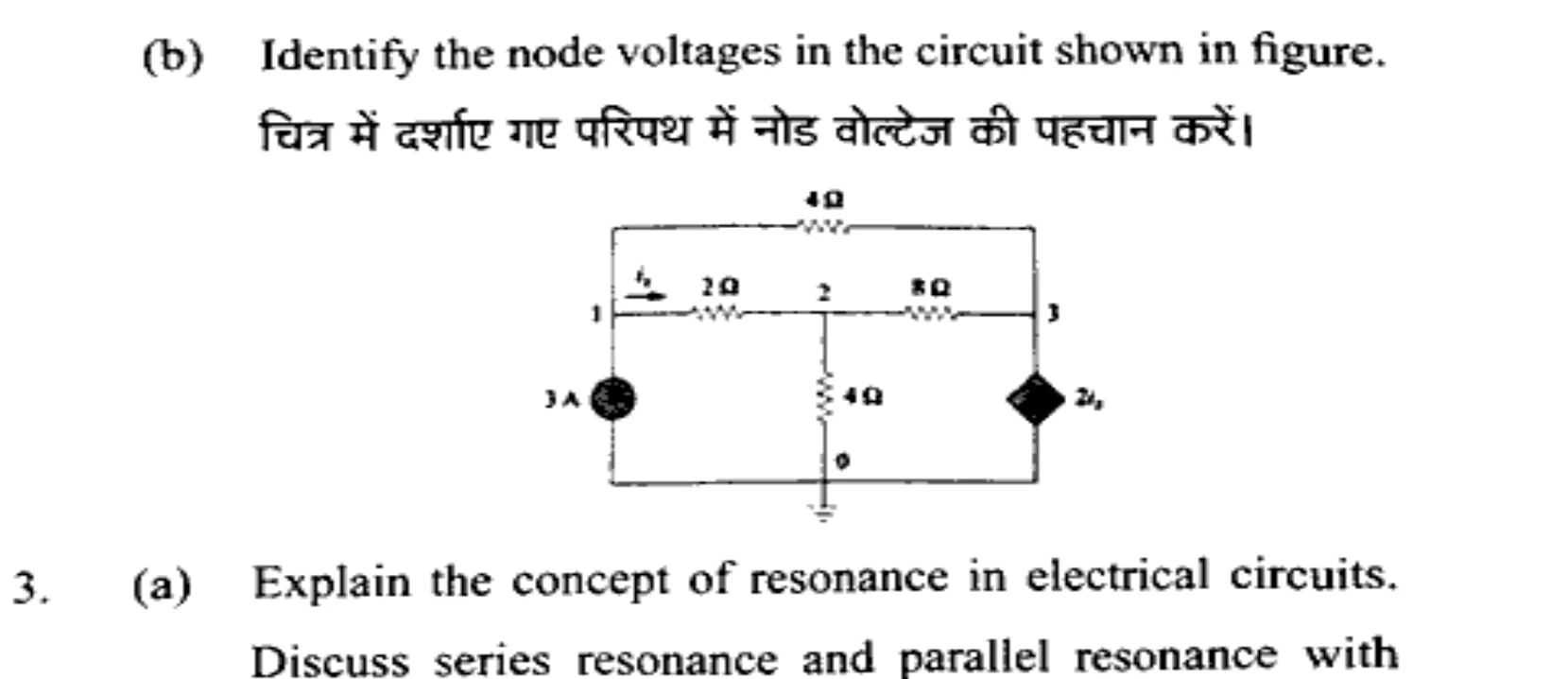
चित्र में दर्शाए गए परिपथ में नोड वोल्टेज की पहचान करें।
विद्युत परिपथों में अनुनाद की अवधारणा को समझाइए। आवृत्ति प्रतिक्रिया विशेषताओं के साथ श्रृंखला अनुनाद और समानांतर अनुनाद पर चर्चा कीजिए।
चित्र में दर्शाए गए परिपथ में मेश करंट i₁ और i₂ की गणना ���ीजिए।
अधिकतम शक्ति स्थानांतरण प्रमेय की व्याख्या कीजिए। डीसी और एसी परिपथों में अधिकतम शक्ति स्थानांतरण की शर्त ज्ञात कीजिए।
मिलमैन प्रमेय और टेलेगेन प्रमेय की व्याख्या कीजिए। नेटवर्क विश्लेषण में इनके महत्व पर चर्चा कीजिए।
लाप्लास रूपांतरण के प्रारंभिक मान प्रमेय और अंतिम मान प्रमेय को बताइए और सिद���ध कीजिए। इनके अनुप्रयोगों पर चर्चा कीजिए।
चित्र में दर्शाए गए परिपथ में अध्यारोपण प्रमेय का उपयोग करके iₓ ज्ञात कीजिए।
फोरियर श्रृंखला के ���्रिकोणमितीय और घातीय रूपों की व्याख्या कीजिए। दोनों निरूपणों की तुलना कीजिए और उनके अनुप्रयोगों पर चर्चा कीजिए।
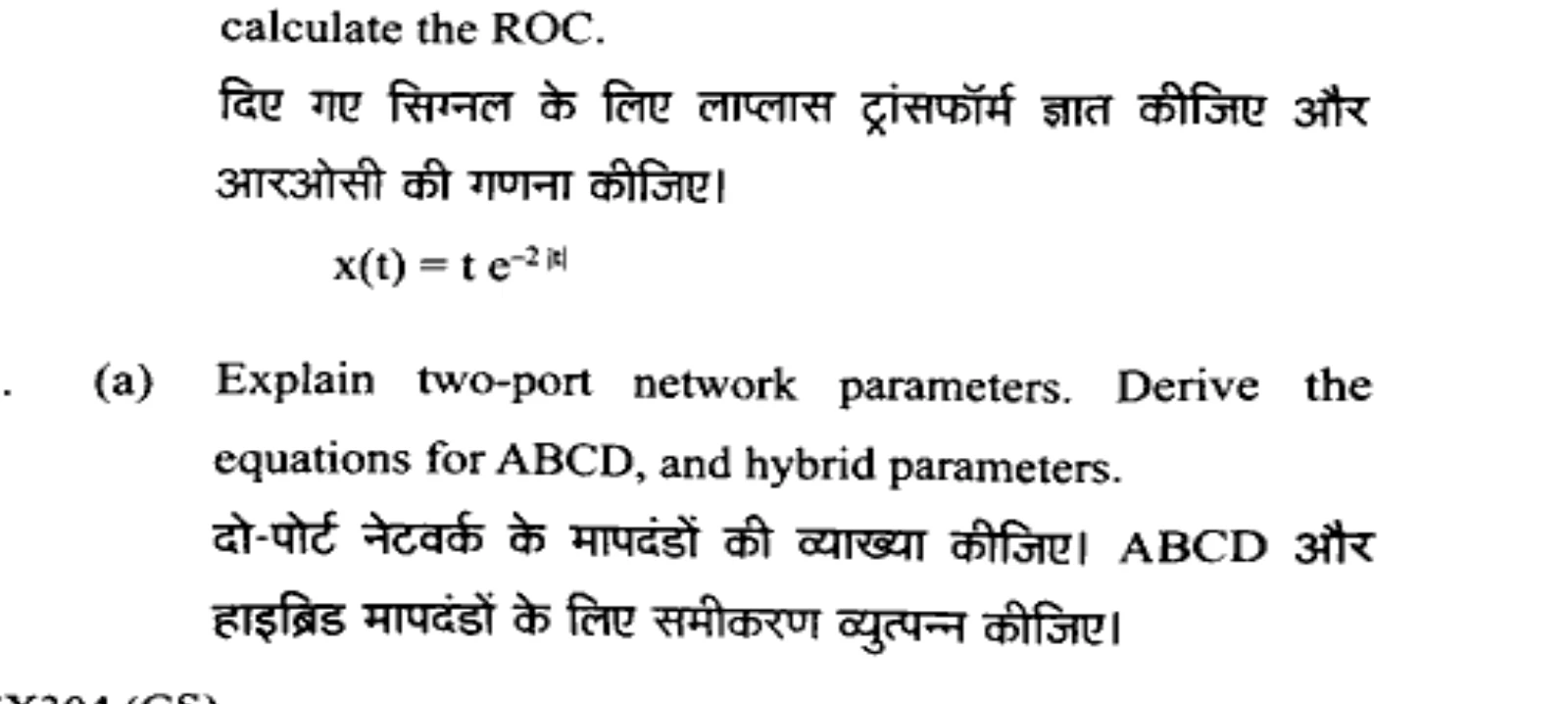
x(t) = t e-2tu(t)
दिए गए सिग्नल के लिए लाप्लास ट्रांसफॉर्म ज्ञात कीजिए और आरओसी की गणना कीजिए।
दो-पोर्ट नेटवर्क के मापदंडों की व्याख्या कीजिए! ABCD और हाइब्रिड मापदंडों के लिए समीकरण व्युत्पन्न कीजिए।
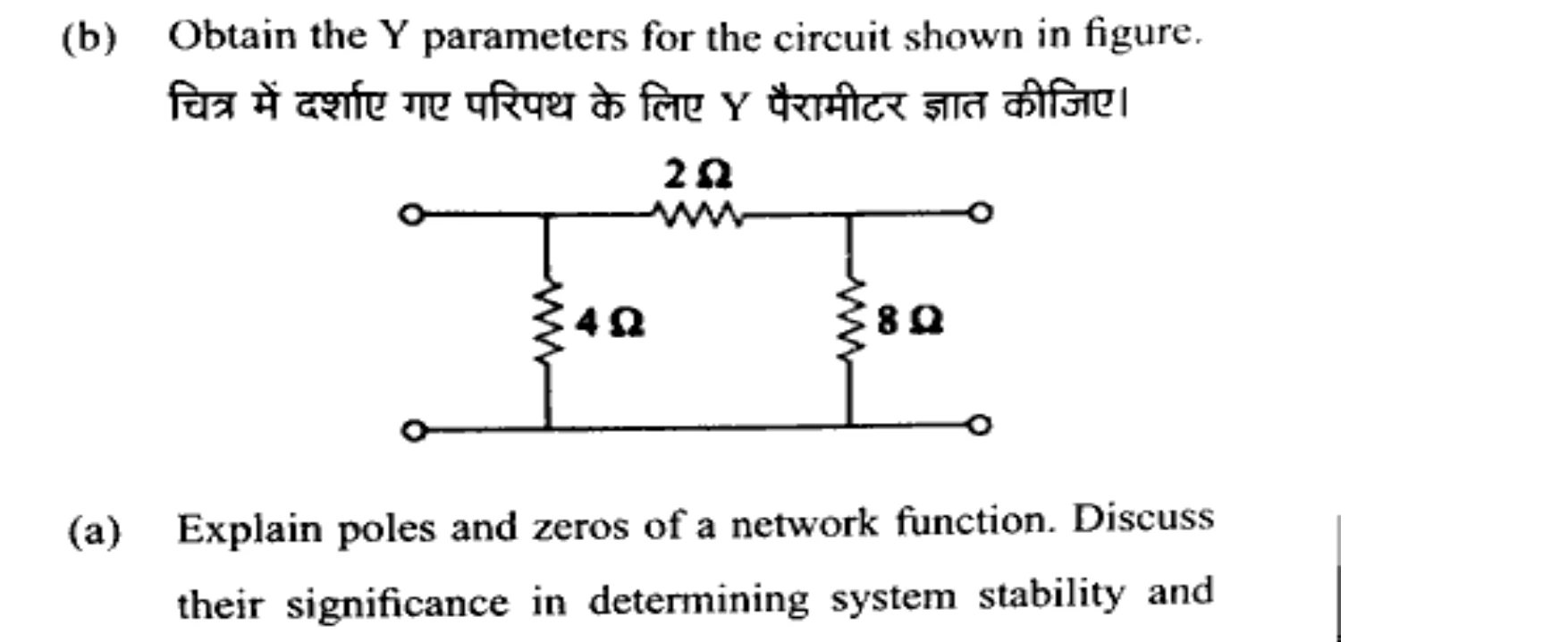
चित्र में दर्शाए गए परिपथ के लिए Y पैरामीटर ज्ञात कीजिए।
नेटवर्क फंक्शन के पोल्स और जीरो की व्याख्या करें। सिस्टम की स्थिरता और आवृत्ति प्रतिक्रिया निर्धारित करने में उनके महत्व पर चर्चा करें।
x(t)=e-at u(t) का फूरियर ट्रांसफॉर्म ज्ञात कीजिए। साथ ही, आउटपुट का मैग्नीट्यूड और फेज स्पेक्ट्रम भी बनाइए।